




- Written by: admindigiroutes
- August 24, 2026
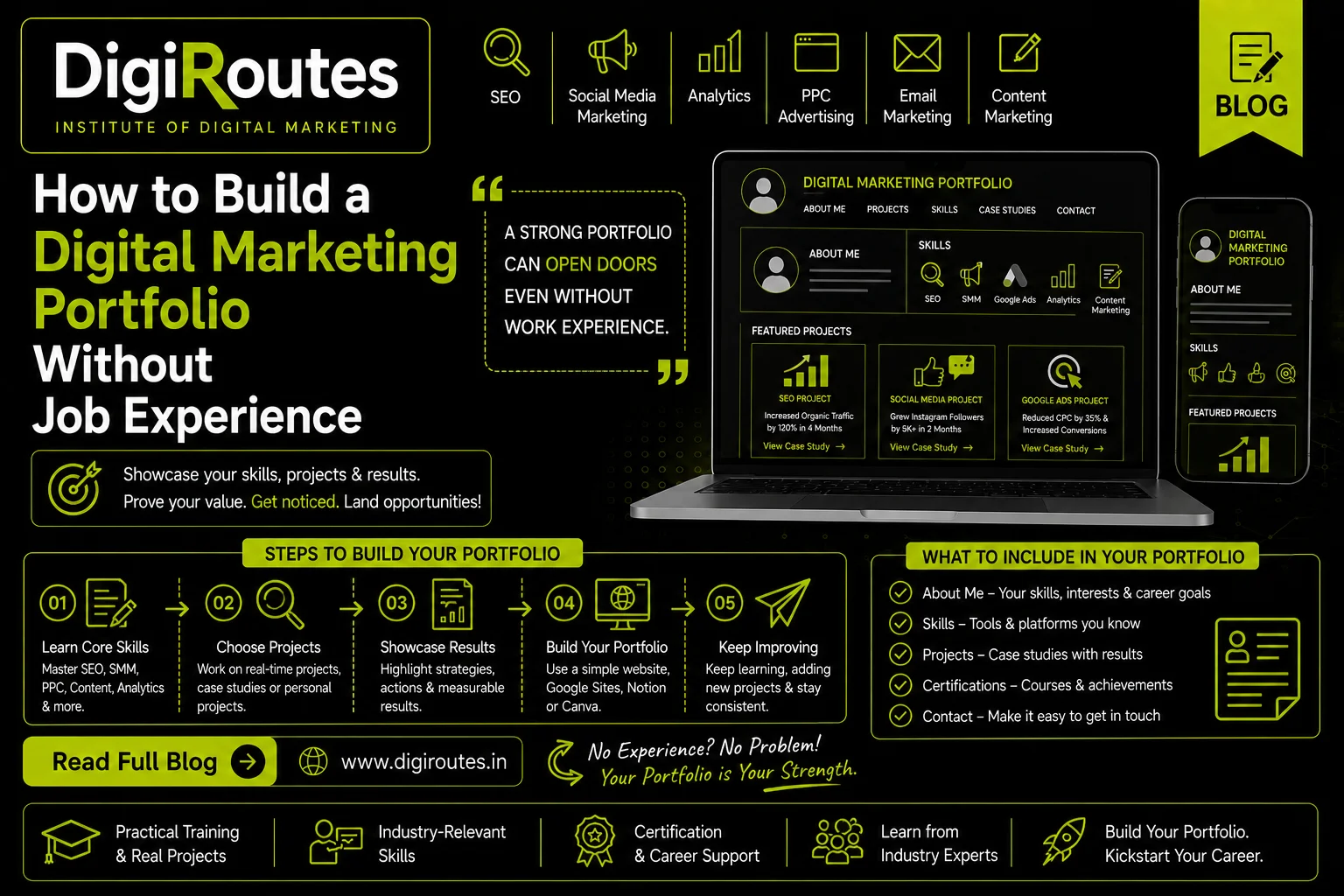
How to Build a Digital Marketing Portfolio Without Job Experience
One of the biggest challenges for digital marketing beginners is the experience paradox:
“Companies want experience, but how can I get experience if nobody gives me a job?”
The answer is to start building evidence of your skills before your first full-time role.
A digital marketing portfolio can demonstrate what you know through practical projects, campaigns, audits, content samples and measurable results.
You don’t need to wait for your first job to create one.
What Is a Digital Marketing Portfolio?
A digital marketing portfolio is a collection of projects and examples that demonstrate your marketing knowledge and practical abilities.
It can include:
- SEO projects
- Website audits
- Keyword research
- Social media campaigns
- Content writing
- Google Ads campaign plans
- Email campaigns
- Analytics reports
- Competitor research
- Case studies
The goal is simple:
Show what you can do instead of only saying what you have learned.
Why Is a Portfolio Important for Freshers?
A resume tells recruiters about your education and skills.
A portfolio provides evidence.
For example, instead of writing:
“I know SEO.”
You can show:
“I completed a technical SEO audit, identified 15 issues and created an optimization plan.”
The second statement is much easier to evaluate.
1. Create an SEO Audit Project
Choose a real or sample business website.
Analyse:
- Page titles
- Meta descriptions
- Headings
- URLs
- Internal links
- Page speed
- Mobile experience
- Indexing
- Content
- Technical issues
Then create a simple report containing:
Problem → Why it matters → Recommended solution
This is an excellent beginner SEO portfolio project.
2. Create a Keyword Research Project
Choose a business category such as:
- Restaurant
- Gym
- Real estate
- Coaching institute
- Ecommerce store
- Digital marketing institute
Create a keyword sheet containing:
- Keyword
- Search intent
- Topic
- Priority
- Suggested page
- Content type
This demonstrates that you understand how keyword research supports content strategy.
3. Create a Social Media Strategy
Build a 30-day social media plan for a fictional or real business.
Include:
- Target audience
- Content pillars
- Posting frequency
- Post ideas
- Reels ideas
- Captions
- Hashtags
- Call-to-action
- KPIs
You can also create sample posts using design tools.
4. Create a Google Ads Campaign Plan
You don’t necessarily need to spend your own money to demonstrate your understanding of paid advertising.
Create a mock campaign.
Include:
- Campaign objective
- Target audience
- Keywords
- Negative keywords
- Ad groups
- Headlines
- Descriptions
- Landing page
- Conversion goal
- Budget assumptions
Clearly label it as a practice project.
5. Build a Content Marketing Project
Choose a topic and create:
- Keyword research
- Content brief
- Blog article
- Social media posts
- Short video ideas
- Internal linking plan
This shows that you can turn one topic into multiple pieces of content.
6. Create an Analytics Report
Use a sample dataset or your own website data.
Create a report showing:
- Traffic
- Top pages
- Traffic sources
- Engagement
- Conversions
- Trends
Then explain:
What happened? Why did it happen? What should the marketer do next?
That final question is especially important.
7. Create an AI-Assisted Marketing Workflow
Since AI is becoming part of modern marketing, demonstrate that you know how to use it responsibly.
For example:
Research → Keyword clustering → Content outline → Human editing → Fact checking → SEO optimization → Publishing → Performance analysis
Don’t simply include AI-generated content.
Show how you used AI to improve productivity while applying your own marketing judgment.
Google’s guidance recommends focusing on helpful, reliable and original content rather than mass-producing low-value AI content.
8. Turn Projects Into Case Studies
A portfolio becomes stronger when projects are presented as case studies.
Use this structure:
Objective
What were you trying to achieve?
Research
What did you discover?
Strategy
What did you recommend?
Execution
What did you create or implement?
Results
What changed?
Learning
What did you learn from the project?
If the project is hypothetical, clearly state that it is a simulated project.
Never invent results.
What Should a Digital Marketing Portfolio Include?
A beginner portfolio can contain:
| Portfolio Section | Example |
|---|---|
| About Me | Short professional introduction |
| SEO | Website audit |
| Keyword Research | Keyword strategy |
| Content | Blog samples |
| Social Media | 30-day content plan |
| Paid Ads | Google Ads mock campaign |
| Analytics | Performance report |
| Case Studies | Project breakdown |
| Certifications | Relevant certifications |
| Contact | Email/LinkedIn/contact details |
Where Can You Create Your Portfolio?
You can create a portfolio using:
- Personal website
- Notion
- Google Drive
- PDF presentation
- Portfolio platforms
A personal website is particularly useful because it can simultaneously demonstrate your understanding of websites, content and SEO.
How Many Projects Do You Need?
You don’t need 20 projects.
Start with 4–6 strong projects that demonstrate different skills.
For example:
- SEO audit
- Keyword research
- Social media strategy
- Google Ads campaign plan
- Content marketing project
- Analytics report
Quality matters more than quantity.
How Can Freshers Get Real Experience?
After building practice projects, look for opportunities such as:
- Internships
- Freelance projects
- Student projects
- Non-profit projects
- Small business projects
- Personal websites
- Practical training projects
Internships can help students connect classroom learning with real marketing workflows, which is why practical exposure is an important part of building a career.
How to Present Your Portfolio in an Interview
Don’t simply send a link.
Walk the interviewer through your strongest project.
Explain:
- The business problem
- Your research
- Your strategy
- Your execution
- The expected or actual result
- What you would improve
This turns your portfolio into a conversation about your marketing thinking.
Frequently Asked Questions
- Can I create a digital marketing portfolio without work experience?
Yes. You can build practice projects, personal projects, simulated campaigns, internships and student projects to demonstrate your skills. - How many projects should a fresher have?
Four to six well-presented projects are enough to start. Focus on showing different digital marketing skills rather than creating many repetitive projects. - What should I include in a digital marketing portfolio?
Include SEO, keyword research, content, social media, paid advertising, analytics and case studies where possible. - Can I use college or training projects in my portfolio?
Yes, provided you clearly explain your role and do not misrepresent a practice project as professional client work. - Do digital marketing jobs require experience?
Requirements vary by company and role. A strong portfolio, practical skills, internship experience and clear understanding of marketing fundamentals can help freshers demonstrate their ability.
Conclusion :
Your first digital marketing job doesn’t have to be the beginning of your practical experience.
You can start building your portfolio today.
Choose a business, identify a marketing problem, research it, develop a strategy, create the required assets and document your process.
That is how you move from:
“I completed a digital marketing course.”
to:
“Here is what I can actually do.”
For students, practical projects and internships can make this transition much easier because they provide opportunities to apply concepts in realistic marketing situations.