






- Written by: admindigiroutes
- November 2, 2026
Google Keyword Planner vs Semrush: Best Keyword Research Tools for SEO in 2026
Keyword research is one of the most important steps in Search Engine Optimization (SEO). Before creating a blog, optimizing a website, or running a Google Ads campaign, it is essential to understand what people are searching for online. The right keywords help businesses connect with their target audience, attract relevant website visitors, and improve their online visibility.
1. What Is Google Keyword Planner?
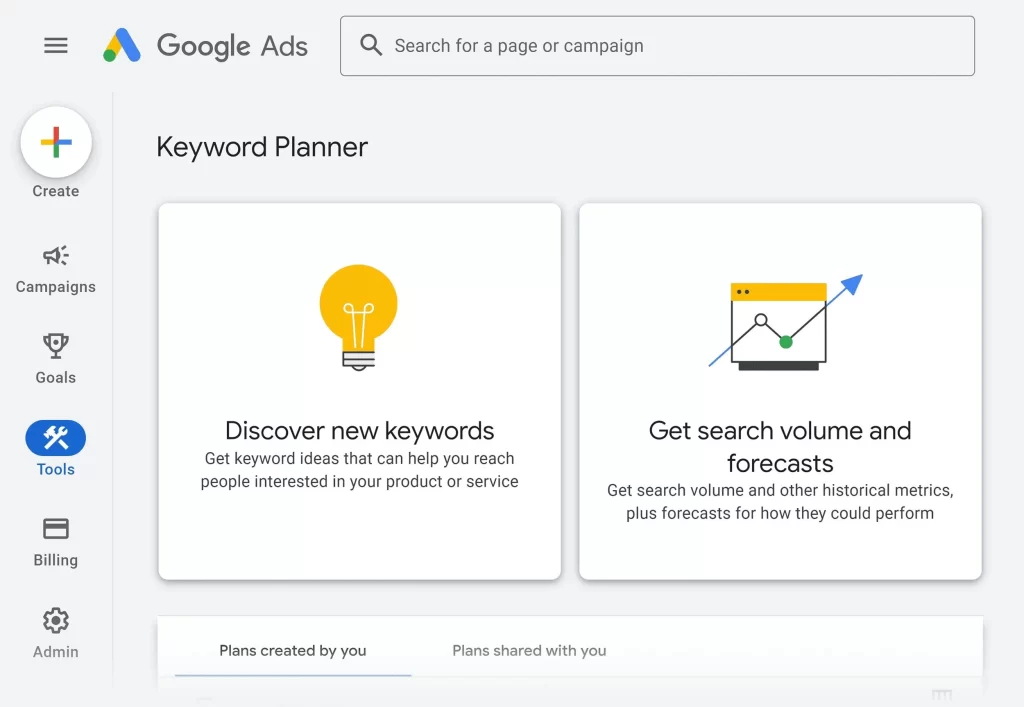
Google Keyword Planner is a free keyword research tool available within Google Ads. It helps advertisers and SEO professionals discover relevant search terms, explore keyword ideas, and understand estimated search demand.
It is especially useful for identifying keywords related to a business, product, service, or website topic. Although it is primarily designed for Google Ads campaign planning, marketers can also use its keyword suggestions to support their SEO content research.
Key Features of Google Keyword Planner
Discover New Keywords: Find keyword ideas related to your products, services, and website.
Search Volume Insights: Explore estimated average monthly searches and historical search trends.
Competition Data: Understand advertiser competition for keywords in Google Ads.
Location-Based Research: Discover keyword opportunities for specific countries, cities, and target locations.
Keyword Forecasting: Explore estimated clicks, impressions, and other advertising performance forecasts.
Campaign Planning: Organize keywords to support Google Search advertising campaigns.
2. What Is Semrush?
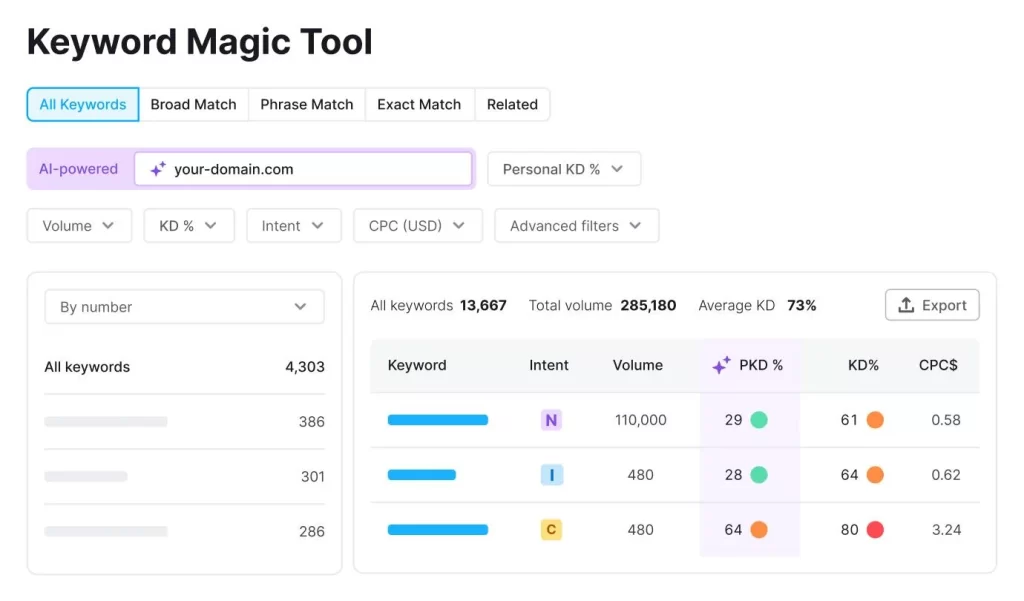
Semrush is an all-in-one digital marketing and SEO platform used by marketers, businesses, agencies, and website owners. It offers tools for keyword research, competitor analysis, backlink analysis, website audits, content optimization, and search performance monitoring.
Unlike Google Keyword Planner, Semrush provides a wider range of SEO research features that help marketers understand how websites perform in organic search and identify opportunities to improve their rankings.
Key Features of Semrush
Keyword Overview: Explore keyword search volume, keyword difficulty, search intent, and related metrics.
Keyword Magic Tool: Discover keyword variations, long-tail keywords, and related search terms.
Competitor Analysis: Research competitors’ organic keywords and identify potential content opportunities.
Keyword Gap Analysis: Compare keyword profiles to discover keywords your competitors rank for.
Backlink Analytics: Review backlink profiles and referring domains.
Site Audit: Identify technical SEO issues that may affect website performance.
Position Tracking: Monitor keyword ranking changes across selected locations and devices.
SEO Content Tools: Get insights to improve content relevance and optimization.
Google Keyword Planner vs Semrush: What’s the Difference?
Both tools help with keyword research, but they serve slightly different purposes.
Feature | Google Keyword Planner | Semrush |
|---|---|---|
Main purpose | Keyword discovery and Google Ads planning | Complete SEO and competitor research |
Search volume | Yes | Yes |
Keyword suggestions | Yes | Yes |
Keyword difficulty | No standard organic KD score | Yes |
Search intent | Limited direct intent analysis | Yes |
Competitor research | Limited | Advanced |
Backlink analysis | No | Yes |
Technical SEO audit | No | Yes |
Advertising insights | Yes | Yes |
Best suited for | Beginners, advertisers, and keyword planning | SEO professionals, agencies, and businesses |
Frequently Asked Questions (FAQs)
1. What is Google Keyword Planner used for?
Google Keyword Planner is used to discover keyword ideas, explore average monthly searches, review advertising competition, and estimate bids for Google Search advertising campaigns.
2. Is Google Keyword Planner free?
Google Keyword Planner is available through Google Ads without a separate subscription fee. However, Google Ads account setup and billing requirements may apply.
3. What is Semrush used for in SEO?
Semrush is used for keyword research, competitor analysis, backlink research, technical SEO audits, position tracking, and content optimization.
4. Which is better: Google Keyword Planner or Semrush?
Google Keyword Planner is useful for keyword discovery and Google Ads planning. Semrush offers more advanced SEO research features. The right choice depends on your marketing goals.
5. Can beginners use Semrush?
Yes. Beginners can start with keyword research and keyword overview features before exploring competitor analysis, backlink analytics, and technical SEO tools.
6. What is the difference between search volume and keyword difficulty?
Search volume estimates how frequently people search for a keyword. Keyword difficulty estimates how challenging it may be to rank organically for that keyword.
7. How do keyword research tools help local SEO?
They help businesses discover location-based searches, understand local audience interests, and plan relevant service pages and blogs for specific areas.
8. Can I use Google Keyword Planner for SEO?
Yes. Although it is primarily designed for Google Ads, its keyword ideas and search trend information can also support SEO content planning.
Conclusion
Google Keyword Planner and Semrush are valuable tools for anyone learning or working in digital marketing. Google Keyword Planner helps you discover keyword ideas and understand advertising search demand, while Semrush provides deeper insights into organic keyword opportunities, competitors, and website SEO performance.
Learning how to use these tools together can help you create better content strategies, improve keyword targeting, and understand how people search online.
At DigiRoutes – Institute of AI & Digital Marketing, students learn practical SEO techniques and industry-relevant digital marketing tools through hands-on training and real-world projects. Our training covers keyword research, SEO, AEO, GEO, website optimization, content strategy, and more to help learners develop skills for today’s digital marketing industry.
Ready to build your digital marketing skills?
Learn. Practice. Create. Grow with DigiRoutes!
DigiRoutes – Institute of AI & Digital Marketing Hinjewadi, Pune
Website: www.digiroutes.in
Contact: +91 787 555 8998


